
The Union territory of Brahmapada
The Union territory of Brahmapada
WHERE LEGENDS WERE BORN AND CIVILIZATIONS CONVERGED
Situated along the western coast of India and embraced by the Arabian Sea, Brahmapad occupies a unique position in the nation’s cultural landscape. While officially recognized as one of India’s Union Territories, its identity has always extended beyond political boundaries. It is a civilization shaped by divine legend, centuries of foreign influence, and an unwavering commitment to preserving its own heritage.
Unlike any other region in India, Brahmapad traces its origins not merely to recorded history, but to sacred tradition.
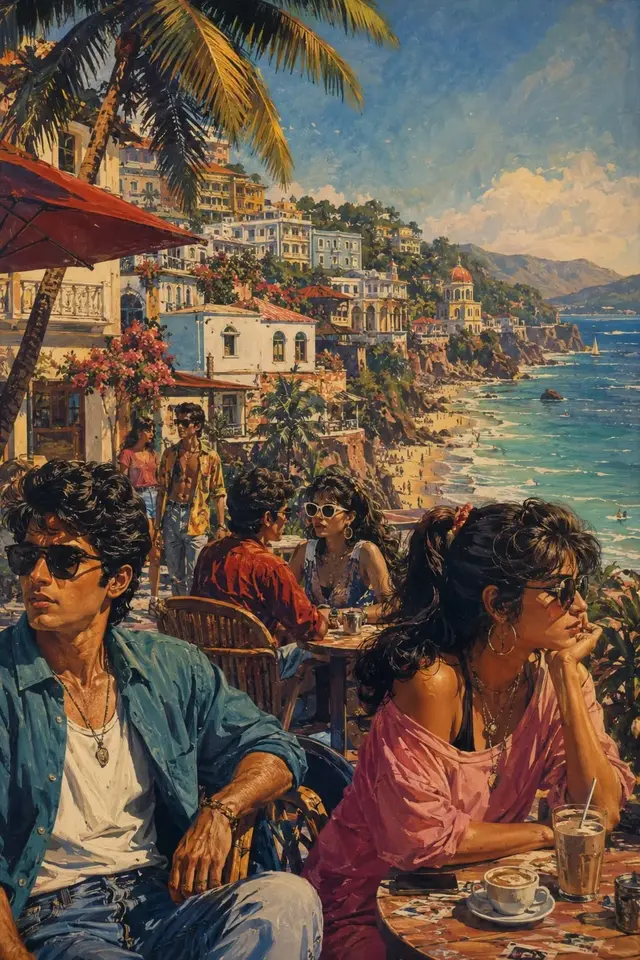
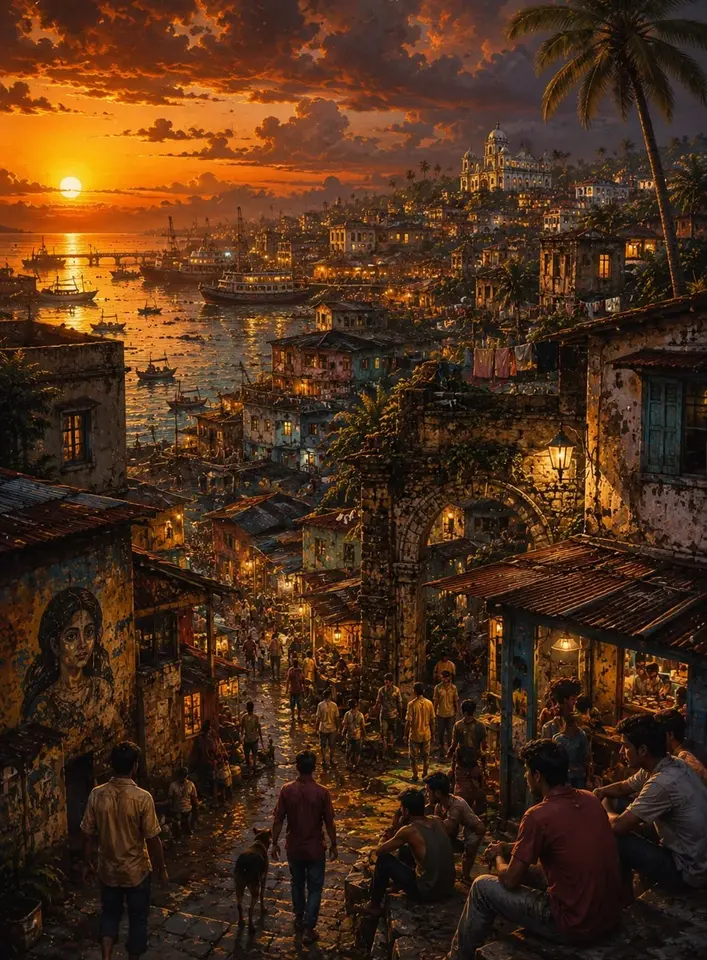
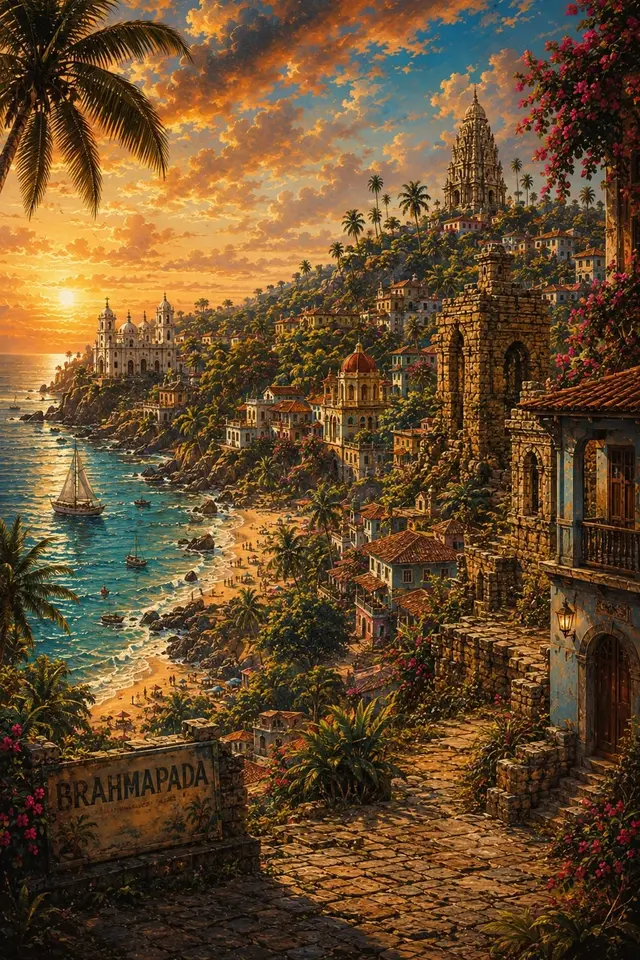

SACRED ORIGINS
Founded by Sudama, blessed by Lord Krishna himself.

TRADING PORT
A legendary port that connected continents and civilizations.

COLONIAL LEGACY
Greek, Dutch, Belgian & French influences shaped its grandeur.

INDIAN SOUL
Many cultures. One heart Forever Brahmapadi.
The Legend of Sudama
According to the oldest Brahmapadi chronicles, the territory owes its existence to the eternal friendship between Lord Krishna and his childhood companion Sudama.
After Sudama’s visit to Dwarka, Krishna is said to have gifted him an untouched stretch of fertile coastal land surrounded by the sea as a symbol of friendship, dignity, and trust. Rather than founding a royal dynasty centered on conquest, Sudama established a peaceful spiritual settlement devoted to learning, discipline, craftsmanship, and selfless service.
His disciples came to be known as the Sudama Shishya, literally “Disciples of Sudama,” while later generations proudly adopted the title Sons of Sudama. They viewed themselves less as descendants by blood and more as heirs to Sudama’s ideals of humility, wisdom, and resilience.
The first settlement eventually grew into Brahmapad, meaning “The Sacred Footsteps of the Divine.”
Even today, the people of Brahmapad consider Sudama not merely their founder but the moral father of their civilization.
The Age of Maritime Prosperity
Blessed with natural harbors and positioned along major maritime trade routes, Brahmapad soon emerged as one of the most prosperous ports of the western Indian Ocean.
Merchant vessels from Arabia, Persia, Egypt, East Africa, Southeast Asia, and the Mediterranean frequented its ports. The Sudama Shishya became renowned as navigators, philosophers, architects, and traders who welcomed knowledge from every civilization while carefully preserving their own traditions.
Unlike many kingdoms that expanded through warfare, Brahmapad expanded its influence through commerce, diplomacy, and scholarship.
This openness would later become both its greatest strength and its greatest vulnerability.
The Age of Foreign Invasions
As maritime trade flourished, Brahmapad attracted the ambitions of powerful empires.
The first major foreign incursions came during the era of the Greeks and Macedonians, whose arrival introduced elements of Hellenistic architecture, sculpture, military organization, astronomy, and philosophy. Although these occupations were relatively brief, traces of Greco-Roman aesthetics became permanently embedded within Brahmapadi artistic traditions.
Centuries later, European colonial powers recognized Brahmapad’s immense strategic and commercial value.
Portuguese merchants established early trading enclaves before power gradually shifted among competing European interests. Dutch administrators transformed the territory into one of the most sophisticated commercial centers in the region, redesigning its ports, canals, warehouses, and civic institutions.
During this period, the historic city of Brahmapad was officially renamed Bampore, a colonial adaptation that would remain in use for generations.
The Belgian Era
The defining chapter of Brahmapad’s colonial history began under Belgian administration.
Belgian governance reshaped the territory’s urban identity more profoundly than any previous colonial power. Grand boulevards, canal districts, Gothic-inspired public buildings, Art Nouveau residences, civic squares, universities, museums, botanical gardens, and meticulously planned neighborhoods transformed Bampore into one of the most architecturally distinctive cities in Asia.
French language and etiquette gained prestige among the educated classes. Dutch continued to influence administration and commerce, while Belgian culinary traditions blended unexpectedly well with local Indian flavors.
The result was not cultural replacement but cultural layering.
Brahmapad remained unmistakably Indian in spirit while developing an unmistakably European urban character.
Independence and Integration with India
When India achieved independence in 1947, Brahmapad did not immediately become part of the Indian Union.
Much like Goa, Bampore continued under European colonial administration for several more years.
Only during the wave of decolonization that swept across the subcontinent in the decades that followed did the territory finally regain its freedom and join the Republic of India.
With liberation came a symbolic act of historical restoration.
The colonial name Bampore was officially retired, and the ancient name Brahmapad was reinstated as the territory’s rightful identity.
A Civilization of Many Worlds
Modern Brahmapad is often described as India’s most cosmopolitan territory.
Walking through its streets is like traversing centuries of history in a single afternoon.
Temple spires stand beside Gothic cathedrals.
Mediterranean plazas open into bustling Indian bazaars.
Dutch canals wind past ancient shrines dedicated to Krishna and Sudama.
Art Nouveau facades overlook traditional ghats.
Stone promenades meet coconut groves and fishing villages that have existed for centuries.
The people comfortably move between Sanskrit traditions, Indian festivals, European cafés, maritime customs, and contemporary urban life.
Rather than existing in conflict, these influences have fused into a uniquely Brahmapadi identity.